Suctorial tadpoles (I): Diversity (North America)
I love tadpoles of all shapes and sizes, but I have a special fondness for a certain kind of tadpole with an extra-large sucker mouth. These suctorial tadpoles (suctorial just means built for sucking, or in this case, for holding on by suction) are generally stream specialists, living only in fast-flowing streams where they use their large mouths to attach to rocks and graze on algae only they can reach.
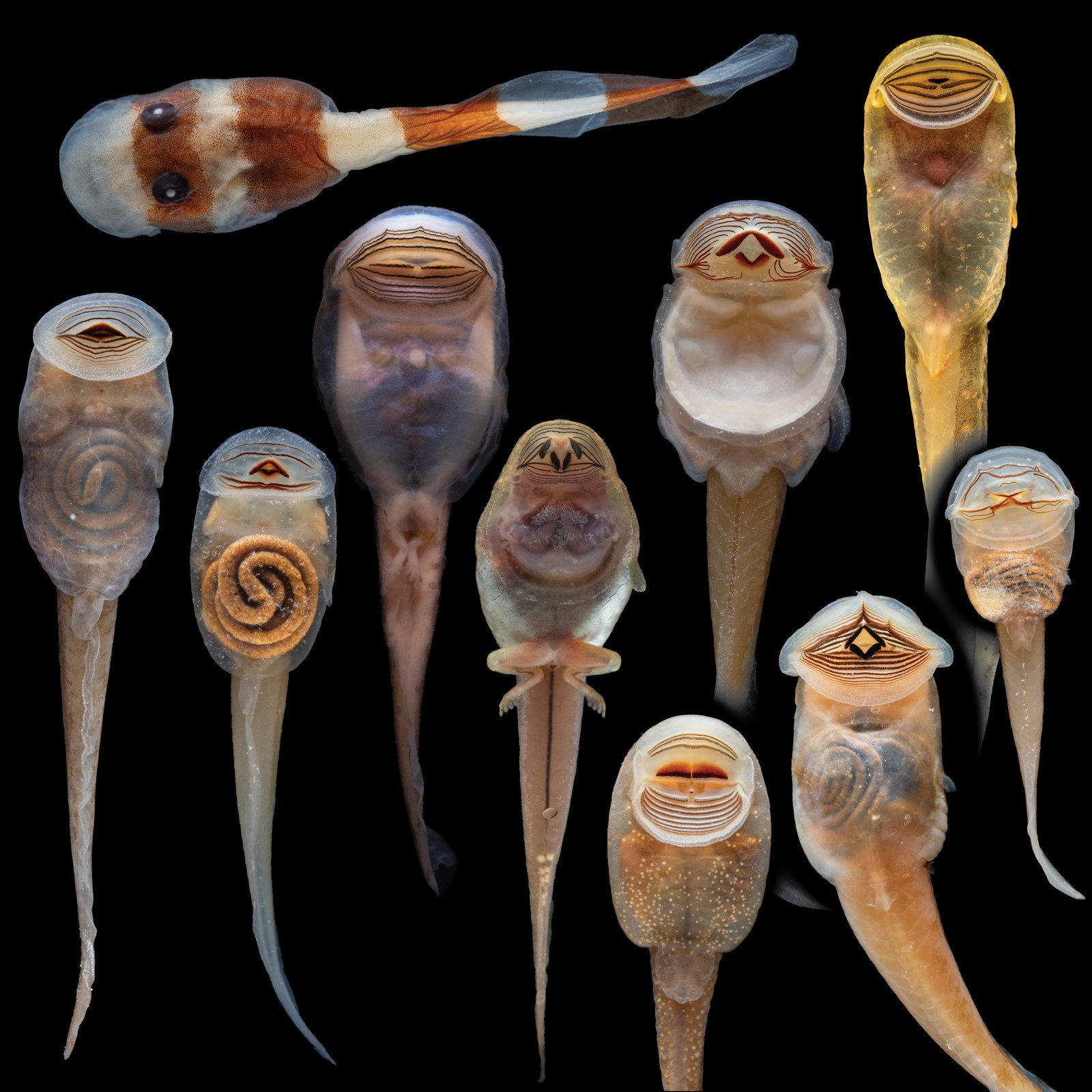
Where do you find suctorial tadpoles?
Suctorial tadpoles can be found all over the world, on every continent except Europe (and Antarctica). Suctoriality has evolved many, many times across different frog lineages. There are many different examples found across Central and South America, Africa, Australia, and different parts of Asia.
In temperate North America, where I live, there is only one living suctorial lineage: the genus Ascaphus, the tailed frogs.
Meet Ascaphus
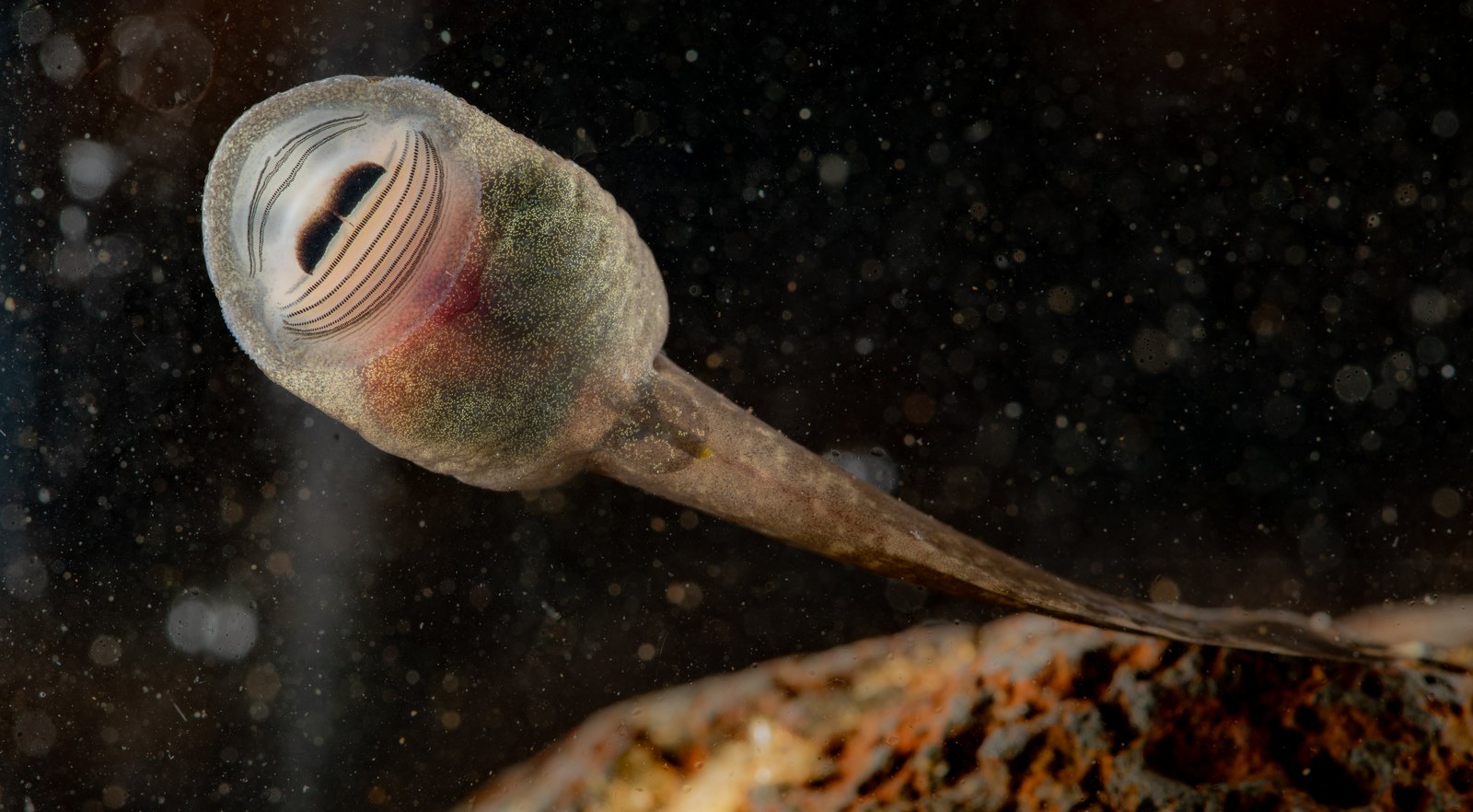
Ascaphus is a really remarkable group of frogs with plenty of interesting adult characteristics (including their tails), but for me, the most interesting thing about them is their tadpoles, of course!
Ascaphus tadpoles are just as remarkable. They have a very large suction cup for a mouth, called an oral disc, with two large rasping plates made of keratin and then many rows of very small, keratinous toothlets.
Their skulls are also really bizarre, looking almost nothing like any other tadpole, instead built to support large suction muscles and their large oral disc.
The 3D models need a browser with WebGL turned on.
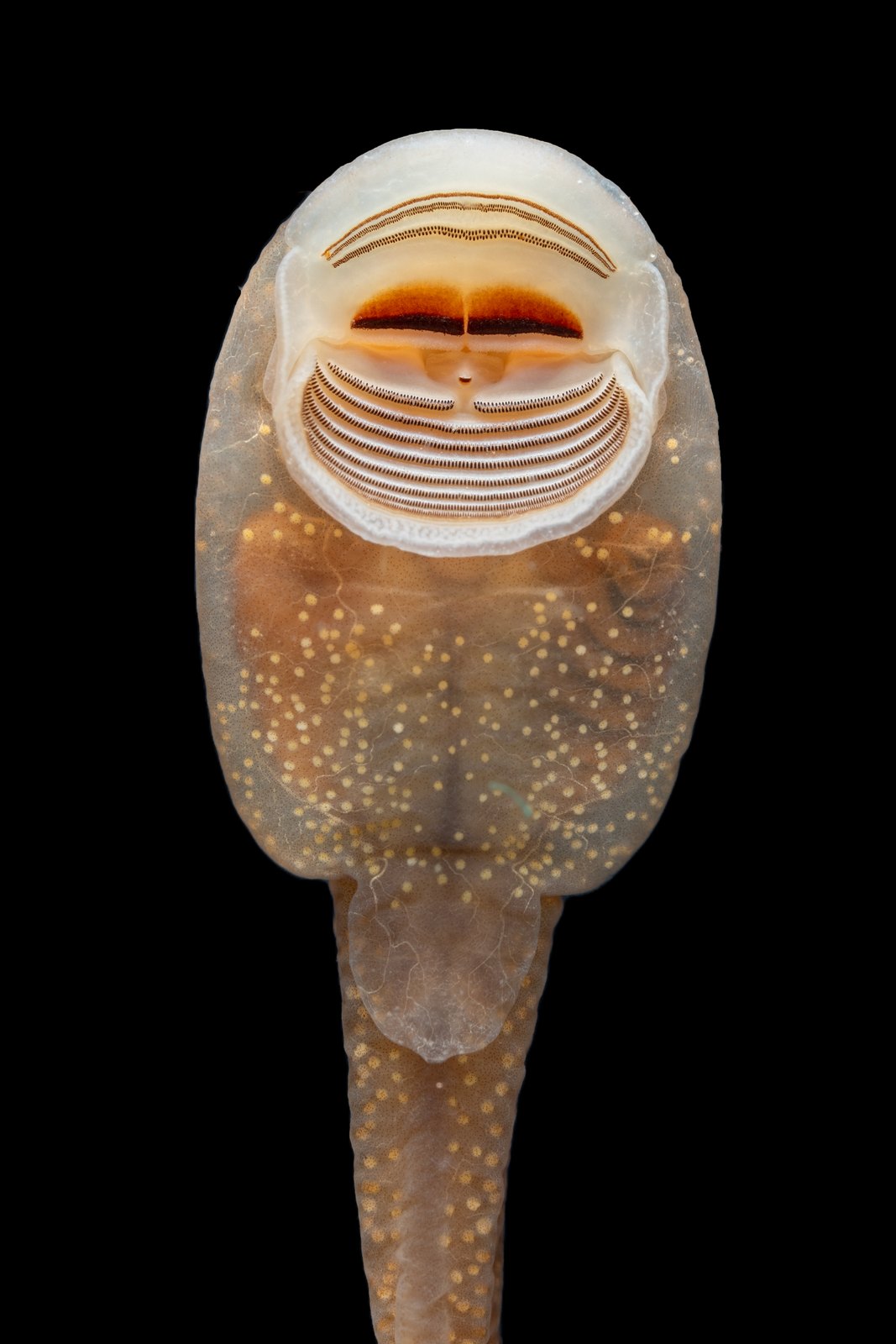
The skull of a tailed frog tadpole (left) next to the skull of a more typical tadpole (right). A tadpole’s skull is almost entirely cartilage, which is why it’s called a chondrocranium. Both are shown at the same scale, and they turn together so you can compare them from any angle.
Where can you find Ascaphus?
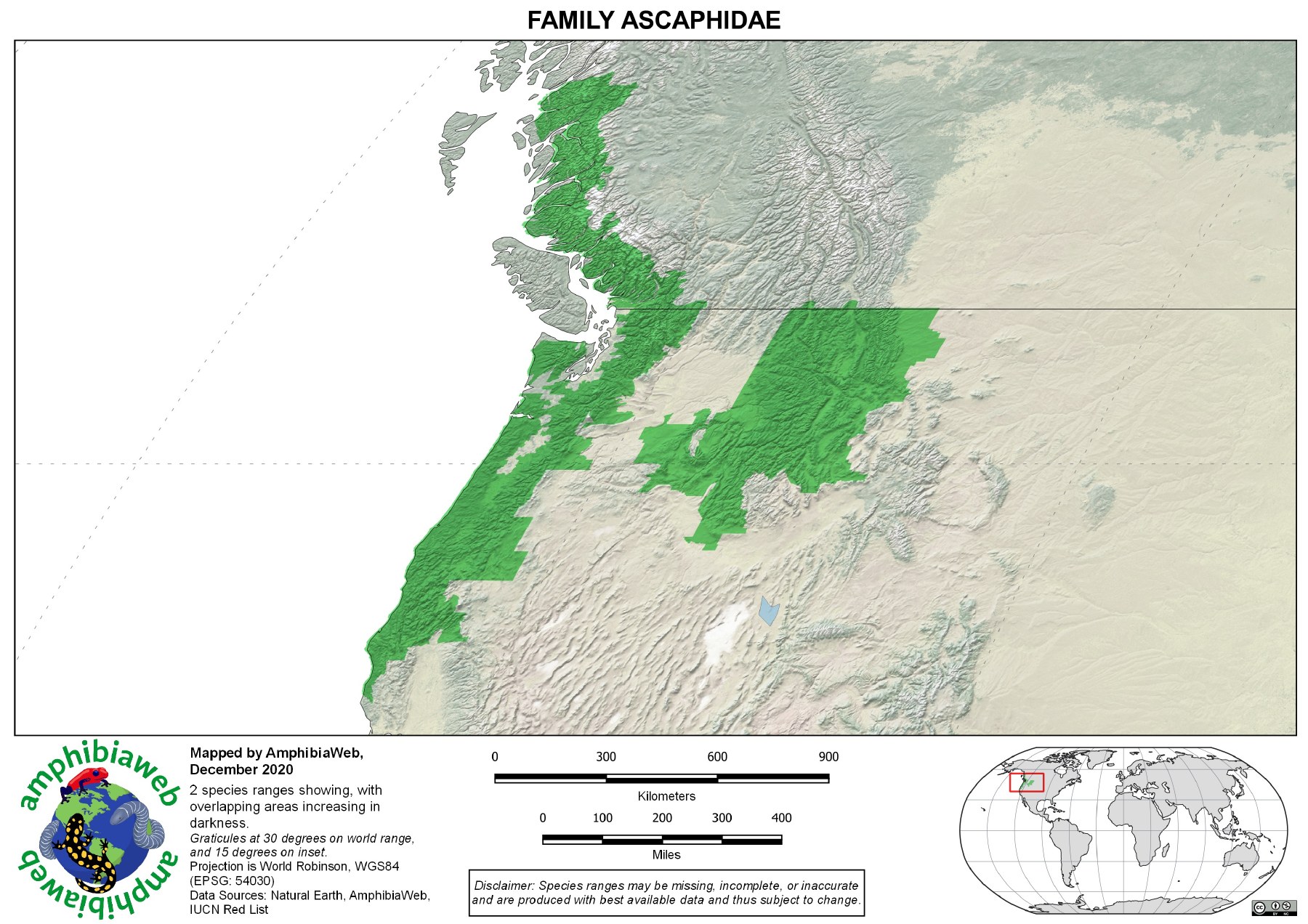
Ascaphus tadpoles are endemic to (only found in) the temperate Northwestern forests of California, Oregon, Washington, Idaho, Montana, and British Columbia. There are two species: Ascaphus truei, found in the coastal forests and the Cascades, and Ascaphus montanus, found in the northern Rocky Mountains.
Both species exclusively breed in high quality streams in good, healthy forest. Like many other suctorial tadpoles, they are quite sensitive to changes in water quality and especially temperature and oxygen levels. In one part of Montana, for example, Ascaphus tadpoles have only been found in streams cooler than about 16 °C (61 °F). For this reason, Ascaphus is a very good indicator species: its presence indicates a forest and stream are healthy, while their disappearance means bad things to come.
Ascaphus tadpoles can live for many years as a tadpole, with some of the longest recorded larval periods of any frog (up to 4 years!), though it is usually more like 2 or 3. Even then, they’re in no rush to grow up: in Montana, tailed frogs don’t breed for the first time until they’re about 7 or 8 years old.